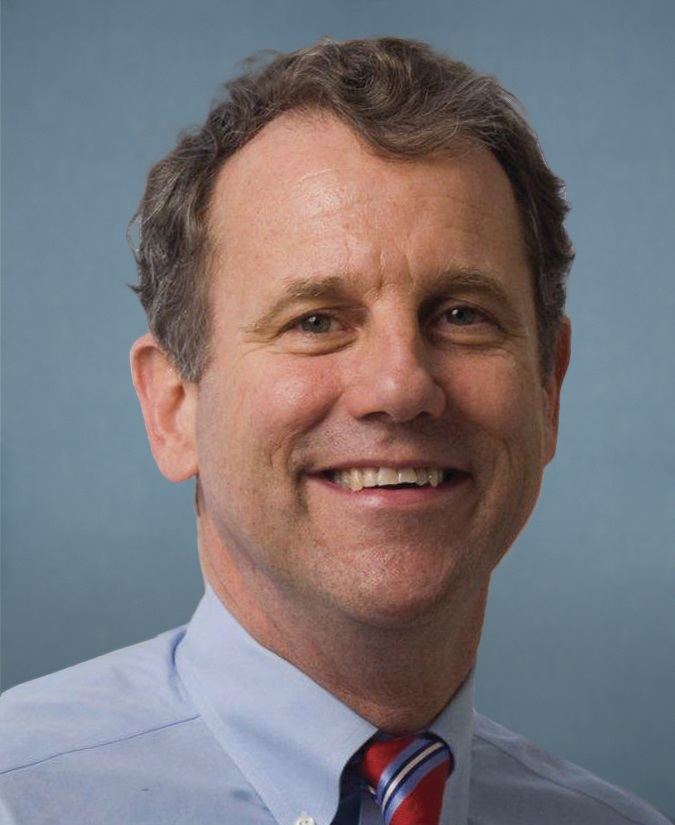
Democrat Sherrod Brown defeated Republican Sen. Jon Husted in Ohio's special U.S. Senate election on Tuesday, Nov. 3, the Associated Press projected, flipping a Republican-held seat in one of the most expensive Senate races in the country.
The AP called the race just after 11 p.m., according to Ideastream, with 87% of votes reported at that time.
Unofficial results
As of Wednesday morning, unofficial AP returns showed 8,727 of Ohio's 8,834 precincts reporting (98.79%), according to the Mercer County Outlook. Results will not be officially certified until county boards complete their canvass.
Candidate | Party | Votes | Pct. |
|---|---|---|---|
Sherrod Brown (winner) | Democrat | 2,301,042 | ~49% |
Jon Husted | Republican | 2,077,748 | ~46% |
Greg Levy | Independent | — | ~2% |
Bill Redpath | Libertarian | — | — |
Brown defeated Husted by roughly a 49%-to-46% margin, according to Columbus Underground. Independent Greg Levy received about 2% of the vote, Columbus Underground reported. The AP page checked by the Mercer County Outlook listed only Brown and Husted vote totals; Redpath and Levy totals were not shown in that document. Cleveland.com reported Brown's official margin at about 4.9 percentage points.
What it means locally
The issue of data center development hit close to home for New Albany residents. Matter News reported that Sunbury residents opposing a proposed data center had watched how the facilities transformed farmland in New Albany, which the outlet described as having "some of the densest concentration of data centers in the country."
Brown attacked Husted's record of promoting data center investment while lieutenant governor. A leaked National Republican Senatorial Committee (NRSC) memo obtained by the Ohio Capital Journal called data centers "the anchor hanging around Husted's neck."
Ohio has 154 operational data centers, with 27 under construction and 57 planned, according to the Office of the Ohio Consumers’ Counsel and dcmap.us, as reported by DTN. A total of 138 local moratoriums have been enacted across the state, the Ohio Capital Journal reported in September.
The candidates
Brown, 73, served three terms in the U.S. Senate before Republican Bernie Moreno defeated him 50.1% to 46.5% in 2024, according to NBC4. He is the seventh former U.S. senator since 1946 to lose a seat and later return to the chamber, NPR reported.
Gov. Mike DeWine appointed Husted, 59, then Ohio's lieutenant governor, to fill the vacancy on Jan. 17, 2025, after JD Vance resigned to become vice president. The winner will serve the remaining two years of Vance's term, which expires in January 2029. Brown will need to run again in 2028 to keep the seat.
A half-billion-dollar race
Advertising spending and reservations surpassed $500 million, according to AdImpact, as reported by cleveland.com. Outside spending tilted heavily toward Husted. Federal Election Commission filings through Oct. 19 showed $198.5 million in outside spending benefiting Husted and $94.7 million benefiting Brown, according to NBC4.
NBC4 reported that Brown's victory restored Ohio's split Senate delegation, which the state previously held for 18 years before Moreno unseated Brown in 2024. The seat returns to the ballot in 2028 for a full six-year term.