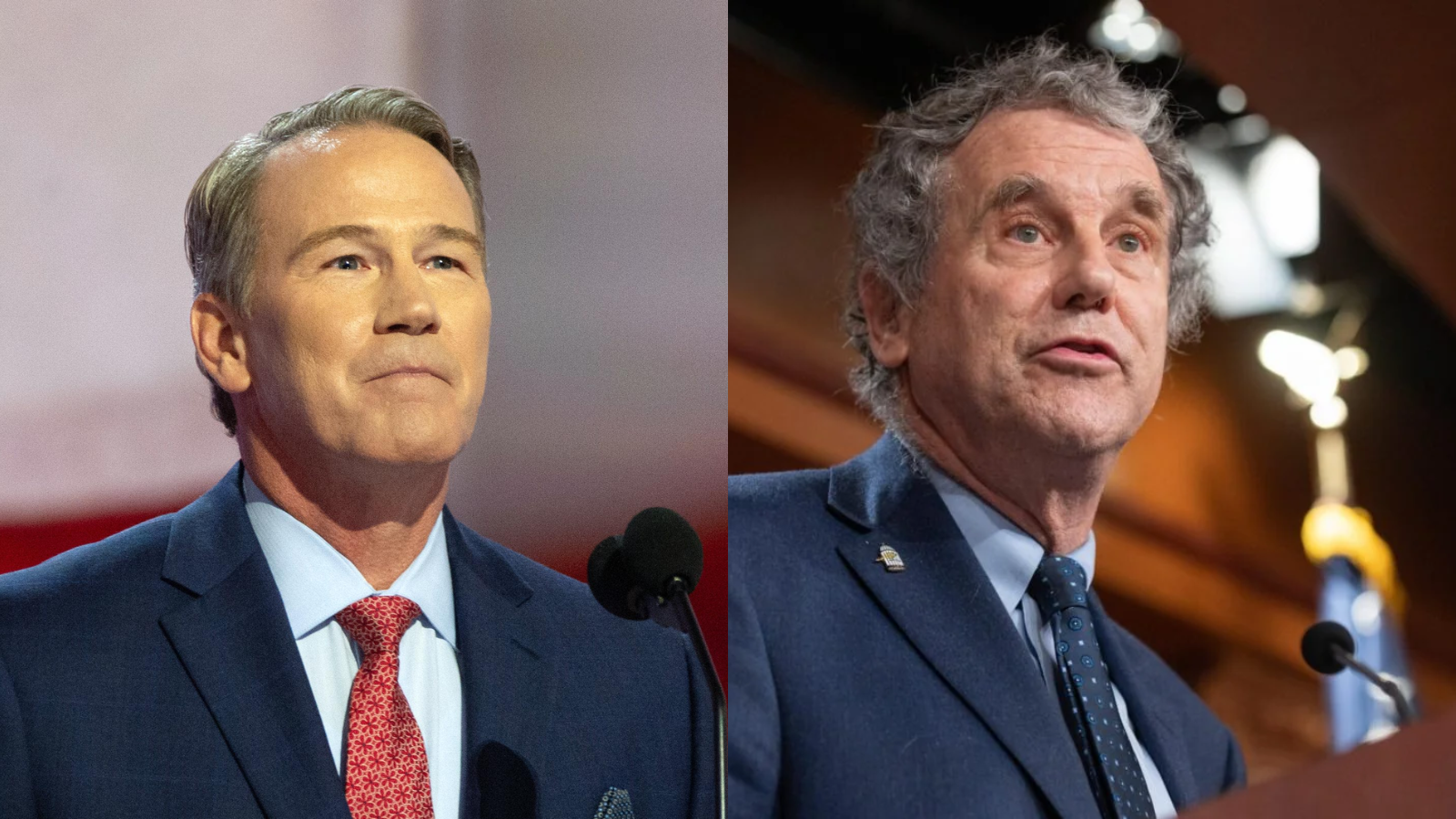
Ohio voters head to the polls Tuesday, Nov. 3, for a special U.S. Senate election that could help determine which party controls the chamber. Republican Sen. Jon Husted faces Democrat Sherrod Brown, along with Libertarian Bill Redpath and independent Greg Levy.
The Nov. 3 special election was required after Republican JD Vance resigned his Senate seat to become vice president in January 2025. Republican Gov. Mike DeWine appointed Husted, then Ohio's lieutenant governor, to fill the vacancy. The winner will serve the remaining two years of Vance's six-year term, which expires in January 2029.
Nonpartisan forecasters Cook Political Report, Decision Desk HQ and Inside Elections all rate the contest a toss-up. The race has drawn more than $400 million in advertising spending and reservations, according to political advertising analytics company AdImpact.
As of Election Day, Tuesday, Nov. 3, 2026, more than 1.73 million Ohio voters have cast early ballots, according to figures reported by the Ohio Secretary of State's Office, about 17.5% higher than the 2022 midterm election.
Return to this article throughout Tuesday evening and Wednesday morning for updated vote tallies.
The candidates
Brown, a three-term senator who represented Ohio in Washington from 2007 to 2025, sought a political comeback two years after losing his seat to Republican Bernie Moreno. Moreno defeated Brown in 2024 by 50.1% to 46.5%, ending an 18-year Senate career built on organized labor, manufacturing, consumer protection and opposition to trade policies Brown argued had damaged Ohio industries.
Brown previously served in the U.S. House from 1993 to 2007, as Ohio secretary of state from 1983 to 1991 and in the Ohio House beginning in 1975. Despite Ohio's increasingly Republican voting patterns, Brown had won Senate elections in 2006, 2012 and 2018, cultivating a reputation as a Democrat capable of attracting working-class voters across party lines.
Husted entered the race with an extensive record in Ohio government but less than two years of experience in Washington. Before DeWine appointed him to the Senate in January 2025, Husted served as lieutenant governor from 2019 to 2025, secretary of state from 2011 to 2019, a state senator and speaker of the Ohio House. His political career emphasized tax reduction, business development, workforce training and conservative fiscal policies.
Husted, who was adopted as a child and grew up in northwest Ohio, has made his family's working-class background a central part of his political identity. In a campaign message describing his father's experience after a factory shutdown, Husted said, "Ohio and America were losing their competitive edge." He has argued that his economic development work helped attract major employers and expand career-training opportunities across Ohio.
Where they differ
Economic issues: Affordability has been the central dispute. Rising prices, household expenses and economic opportunity dominated both campaigns, although the candidates offered sharply different explanations and remedies.
"You can't sustain a democracy when the rich continue to get richer and richer and richer in so many other people's struggle," Brown said at a campaign stop in Columbus on Nov. 2.
Brown accused corporations and wealthy interests of benefiting from policies that left working families struggling with groceries, utilities and health care. Following his May primary victory, Brown said, "No one in the Senate is standing up to these corporations who raise your prices and who game the system."
Husted emphasized job creation, tax reductions and economic growth, defending Republican tax legislation and arguing that families benefit when they retain more of their earnings. "In Ohio, it's always about the economy," Husted said in an October interview with FOX's Battleground program.
Both candidates presented themselves as defenders of working Ohioans while sharply disagreeing over federal taxation and spending.
Data centers: The rapid expansion of data centers emerged as an unusually prominent issue in the race, particularly in communities concerned about electricity prices, water consumption and local development decisions.
Brown criticized tax incentives supporting data center construction and called for developers to shoulder the full cost of the infrastructure and utilities their projects require.
"Ohioans won't stand for this rigged system any longer. Ohio is fighting back," Brown said at a campaign stop in Cleveland on Nov. 2.
Husted, who promoted data center investment while lieutenant governor, defended the economic importance of technology development while supporting measures to protect electricity customers from higher costs.
A September PolitiFact review rated as Mostly True Brown's campaign claim that Husted had promoted data center development and associated tax incentives, noting that the Ohio Tax Credit Authority formally approved the exemptions.
Health care: Brown campaigned on strengthening access to health insurance, lowering prescription drug prices, reversing Medicaid cuts and restricting insurance companies' ability to deny medically necessary treatment. His campaign portrayed Husted's support for Republican tax and spending legislation as a threat to affordable coverage for Ohio families.
Husted defended the Republican tax package, including its expanded Child Tax Credit and provisions eliminating federal income taxes on certain tips and overtime earnings, subject to statutory limits. The legislation also imposed new Medicaid and food-assistance requirements that Democrats criticized. Husted separately proposed legislation addressing the benefits cliff, which occurs when higher earnings cause workers to lose eligibility for public assistance.
The competing approaches reflected a central dispute over how Washington should balance taxes, government benefits and health coverage.
Immigration and border security: Immigration and border security were recurring campaign themes, with Husted linking Brown to the Biden administration's immigration policies and advocating stronger enforcement at the southern border. Husted's campaign characterized public safety and immigration enforcement as priorities and argued that Brown had supported policies that weakened border security.
"We believe that you should follow the law and enforce the law," Husted said during a campaign stop in Cleveland on Nov. 2.
Brown supported additional border security personnel, technology and efforts to combat fentanyl trafficking during his Senate career, while also opposing some Republican immigration proposals. He advocated extending temporary protected status for eligible Haitian immigrants living in Ohio, particularly in Springfield, where the immigrant community became a national political issue. Brown said in August that he supported deporting people who committed serious crimes while seeking a workable policy for immigrants who had contributed to their communities.
Abortion rights. Abortion rights distinguished the candidates in a state where voters approved a constitutional amendment protecting reproductive decisions in November 2023. Brown supported that amendment, known as Issue 1, and previously voted to advance federal legislation protecting abortion access. He said the decision should rest with a woman and her doctor.
Husted opposed Issue 1 and has identified himself as an abortion opponent. In January 2025, he voted to advance federal legislation concerning medical care for infants who survive attempted abortions. At a Senate hearing in January 2026, he also advocated requiring in-person visits before dispensing the abortion medication mifepristone, citing concerns about coercion and misuse.
The contrasting records offered Ohio voters substantially different approaches to reproductive rights and federal restrictions on abortion.
Polls show a tight race
A New York Times/Siena College poll released Nov. 1 showed Brown leading 49% to 44% among likely voters, with a margin of error of plus or minus 4.4 points, according to the Siena Research Institute. A Fox News survey conducted Oct. 15–19 placed Brown ahead 52% to 47%, while a Coefficient survey found Husted ahead by less than one point, NBC4 reported.
"We need you desperately, it's going to be a close race folks," Husted told a Cleveland audience on Nov. 2.
An ActiVote poll released Oct. 31 put Brown's lead at 0.4 percentage points among 400 likely voters, with an expected error of 4.9 points.
Big money pouring in
Through Sept. 30, Brown's campaign reported raising $61.7 million and spending $56.8 million. Husted's campaign reported raising $19.2 million and spending $10.3 million, according to NBC4.
Outside spending has been massive. A tally of Federal Election Commission filings through Oct. 19 found $198.5 million in outside spending benefiting Husted and $94.7 million benefiting Brown. The cryptocurrency industry alone has spent about $54 million supporting Husted, Spectrum News 1 reported, topping the $40 million it spent in 2024 to help defeat Brown.
Elon Musk has funneled more than $7 million to independent groups seeking to help Husted, the Ohio Capital Journal reported.