Workers who retrained for semiconductor jobs at Intel's Ohio One campus are already employed elsewhere, and New Albany's record tax collections driven by construction could face a cliff once building winds down and chip production remains years away.
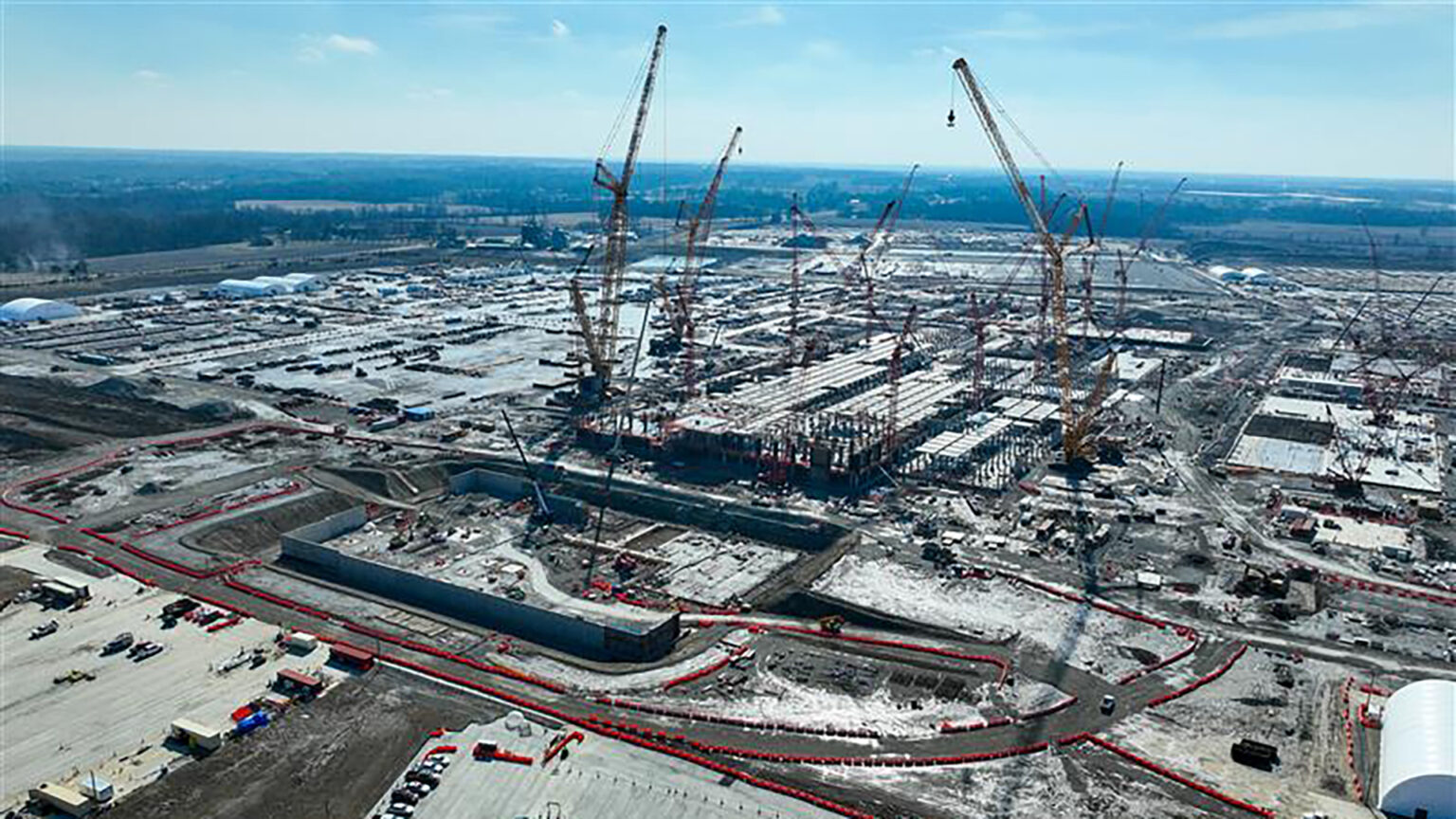
Intel's first fab in the New Albany International Business Park is now scheduled for completion in 2030 and operations in 2031, according to the Columbus Dispatch. The timeline has been pushed back twice from an original 2025 production target. Intel VP and Ohio site manager Jim Evers wrote in a Feb. 7 letter to the Ohio Department of Development that the company would "pace construction with customer demand."
The delay has already reshaped the workforce pipeline that was supposed to feed the fabs. Central Ohio Technical College launched a Semiconductor Manufacturing Engineering Technology program after Intel's 2022 announcement, funded in part by $17.7 million Intel gave to Ohio colleges. This summer, COTC renamed it Electromechanical Engineering Technology, a signal that graduates are no longer being trained for a single employer.
COTC President John Berry told The Reporting Project in a July 29 story that the delay creates a large-scale pipeline risk. The college's Spring 2026 engineering graduates posted an 86% placement rate, but they're working at Battelle, Boeing, American Electric Power, Illuminate USA and other employers. Not Intel. Berry warned that by the time Intel is ready to hire hundreds of workers, those graduates may be settled in stable jobs and unwilling to leave.
Stephanie Kendall, 46, closed a state-certified daycare she ran for 13 years to enroll in the semiconductor program. Intel paid for some of her semesters and invited her to tour a facility in Arizona. She now works as an electromechanical technician at Battelle in Hilliard.
"I closed my business and went back to school to double my income, which I have not done," Kendall told The Reporting Project.
Angelic Andreoli enrolled at COTC in August 2023 after learning about Intel while getting her GED. She graduated with degrees in electrical engineering technology and semiconductor manufacturing and now works as a metal deposition technician in a Columbus clean room at Battelle. She said she wouldn't have enrolled without Intel's announcement.
New Albany's construction-fueled boom
For now, the business park is thriving on construction activity alone. New Albany's income tax collections through June 2026 hit $36.5 million year-to-date, a 34.9% increase over 2025, according to the city's June finance report prepared by Finance Director Bethany Staats. Full-year 2025 collections beat 2024 by an unprecedented $12.5 million.
The driver: construction withholding. Year-to-date withholding in the General Fund reached $21.7 million through June, higher than any year since 2022. Nearly 10 million square feet of commercial space was under active construction in the business park as of May 2026, according to the city's community development report, up 66% from January 2025.
But the finance report flags the vulnerability directly, calling for "continual monitoring" and "timely adjustments to income tax revenues estimates" as the city realizes the effect of construction-company withholding on overall revenue growth.
City response
New Albany communications officer Josh Poland said the city remains committed to supporting the Ohio One campus and characterized Intel's slower pace as a strategic decision that positions the company to accelerate once customer demand materializes.
Intel has spent $5.26 billion on the project to date, including $1.5 billion in 2025, according to the Dispatch. The company told NBC4 it does not anticipate further delays as of February. Reports circulated in July 2026 that Intel was seeking a partner to help run the Ohio fab, though South Korean chipmaker SK Hynix denied it was negotiating to acquire the campus.
The broader business park, with 43 million square feet of commercial space and $54 billion in private investment across 9,000-plus acres, provides a cushion. Data centers, solar manufacturing and defense contractors are already competing for the same technical workers COTC is producing.
Fab 1's 2030 completion target is the next milestone. Whether the workforce pipeline will still be waiting is another matter.